When you get a new piece of tech, whether a smartphone, a laptop or hearing aids, you take some time to learn how to use it. With a new pair of hearing aids, part of that process is learning how to use them effectively in noisy environments.
How Loud Environments Affect the Way You Use Hearing Aids
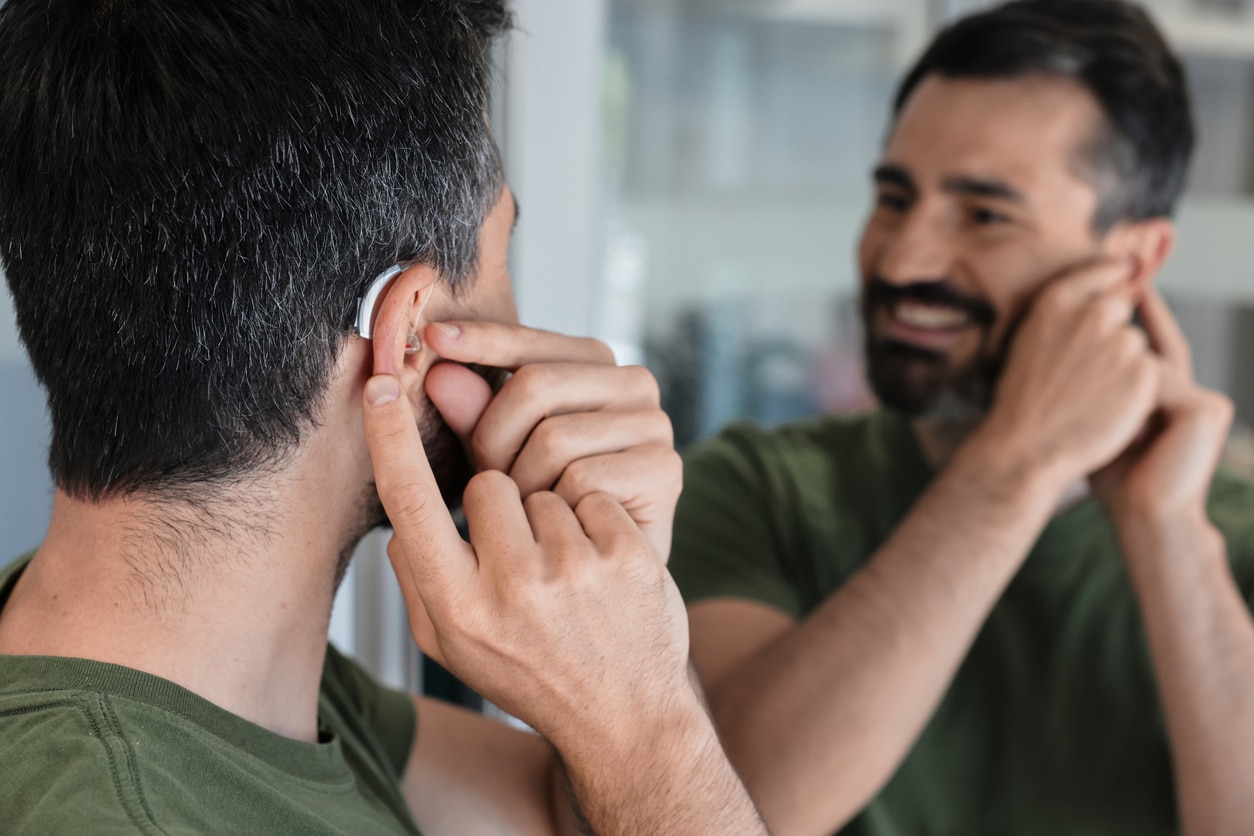
Loud environments are challenging for people with hearing loss. The combination of multiple voices speaking at once and a constant stream of background noise can make it difficult for your ears to focus on one thing at a time, particularly if you have greater hearing loss in one ear than the other.
While hearing aids are great at amplifying sound, they may need a few adjustments in noisy environments to counter the competing sounds.
Three Hearing Aid Adjustments for Noisy Environments
There are three simple adjustments you can make to your hearing aids to improve their sound in noisy environments:
- Noise suppression. Some hearing aids offer active noise suppression that isolates and amplifies speech without amplifying background noise. While the feature isn’t perfect, it can significantly help in noisy environments.
- Turn on directional microphones. If your hearing aids offer them, directional microphones are an excellent tool when you’re in noisy environments. In contrast to omnidirectional microphones, which amplify noise equally from all directions, directional microphones are strategically placed in your devices to amplify sound in front of and behind you. When the microphones work with your devices’ active noise suppression technology, they help you focus on one voice in a crowd.
- Adjust the sound. Some hearing aids automatically adjust their volume based on your environment. With others, you will need to manually raise or lower the volume. You can do so using buttons on the device itself or through the connected smartphone app. You can lower the volume for quiet evenings at home and raise it for nights out at Clancy’s Irish Pub.
Hearing aids are advanced devices that could benefit as many as 28.8 million U.S. adults.[1] Combining the above three tips with regular hearing aid care will ensure you get the most benefit from your devices possible. If it’s been six months or more since your last hearing aid repair & service appointment, contact Advantage ENT & Audiology to schedule one.
[1] National Institute on Deafness and Other Communication Disorders. (n.d.). Quick statistics about hearing. U.S. Department of Health and Human Services. https://www.nidcd.nih.gov/health/statistics/quick-statistics-hearing